
Walking on a Frozen River:
Is the Chadar Trek Calling Your Name?
Everyone sees the pictures of the Chadar Trek and says "wow". But the first question they usually ask is, what's it really like to walk on a frozen river when it's that cold out? It's one of those trips that's hard to explain, but I'm going to try.
The River That Breathes
The first time the ice groaned under me, I just stopped dead in my tracks. It’s not the loud crack you might imagine, it’s this deep, vibrating sound that comes from right under your boots. Tenzin, my guide, just laughed and kept walking. “She is just talking to you,” he said. That’s when I realized the Chadar wasn’t just a sheet of ice; it was a living, breathing thing.
Every day you’re walking about 10 to 15 kilometers, and it hits you that this isn’t a tourist trail. It’s the same path families have used for hundreds of years to survive the winter. That thought stays with you.
It’s a Challenge. And It’s Magical.
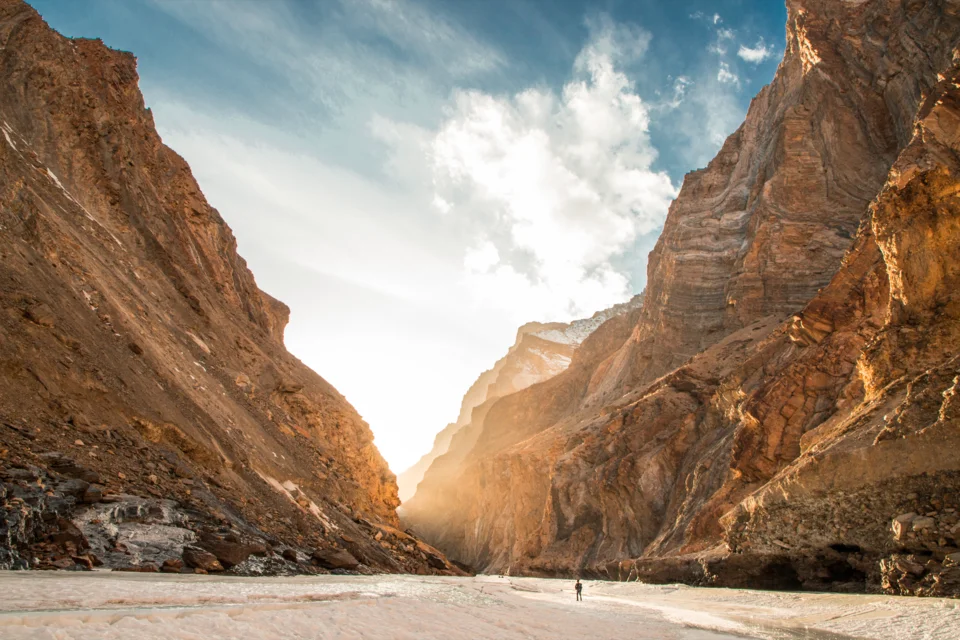
I’m not going to sugarcoat it, this trek will push you. It is properly tough. The temperatures are no joke, and you’ll be camping in conditions that regularly dip to minus 25°C at night. The daily walk is a constant negotiation with the surface. sometimes it’s solid, glassy ice, other times it’s covered in snow, and occasionally you have to scramble over rocks where the river flows too fast to freeze. You’ll definitely have moments where you wonder what you signed up for.
But then, the magic happens. It happens when you’re huddled in the dining tent, sipping hot soup that warms you to your soul, sharing stories with people who were strangers just a few days ago. It happens when you step out of your tent at night and see a billion stars blazing in a sky with zero pollution. You also look up at the gorge walls and can see all these wavy lines in the rock, like a giant layer cake squished together. It makes you feel tiny, knowing you’re walking through a place that took millions of years to form.
So, Do You Have What It Takes?
This trek is accessible to many, but preparation is everything. You don’t have to be a professional mountaineer, but you do need to be ready. It boils down to three key things:
- Honest Fitness: You should be comfortable walking for several hours a day for about a week. Being able to comfortably run 5k or handle a few long day hikes before your trip is a great benchmark. Good cardio and leg strength will make your experience much more enjoyable.
- A Resilient Mindset: This trek is as much a mental game as a physical one. The river often decides your pace, not you, so flexibility is key. A positive attitude and the ability to embrace being out of your comfort zone are your most important pieces of gear.
The Golden Rule: Acclimatization. This is non negotiable. Leh sits at an altitude of 3,500 meters (11,500 ft), and your body needs time to adjust to the lower oxygen levels. You must spend at least 2 to 3 days getting used to the altitude before starting. Rushing this is the fastest way to ruin your trip with altitude sickness.
Why a Good Guide is Everything
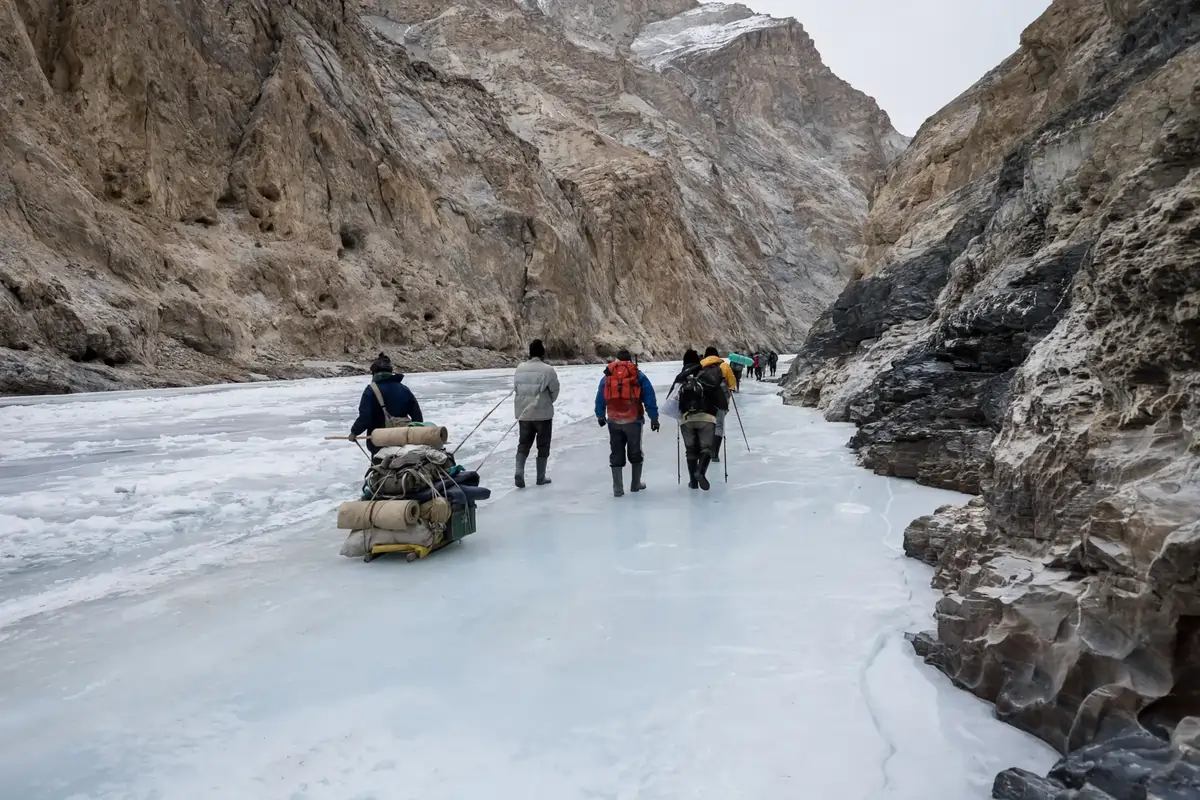
The river changes every single day, even every hour. An expert local guide can read the ice like a book, they know where it’s safe, where it’s thin, and how to navigate any situation. They are not just leaders; they are your chefs, your logistics managers, and your first line of safety, with many certified in wilderness first aid. This isn’t a place for guesswork.
At Snowbird Himalayan Adventures, our Ladakhi guides have grown up with this river. This isn’t knowledge you learn from a book; it’s passed down from their parents and grandparents. Having that level of experience on the ice means you can actually relax and just soak in where you are, instead of constantly worrying about what’s next.
Is This Trek For You?
So, after all that, you should know that this trek definitely isn’t for just anyone. And that’s fine. It’s more of a pilgrimage than a vacation, a true expedition that pushes you. But if you’re looking for an adventure that will genuinely change you and leave you with an incredible sense of accomplishment, this is it. It’s a story you’ll be telling for the rest of your life.